Beyond the Mind: The Neuroscience of Hypnosis, Hemisphere Synchronization, and the Breath That Sets You Free
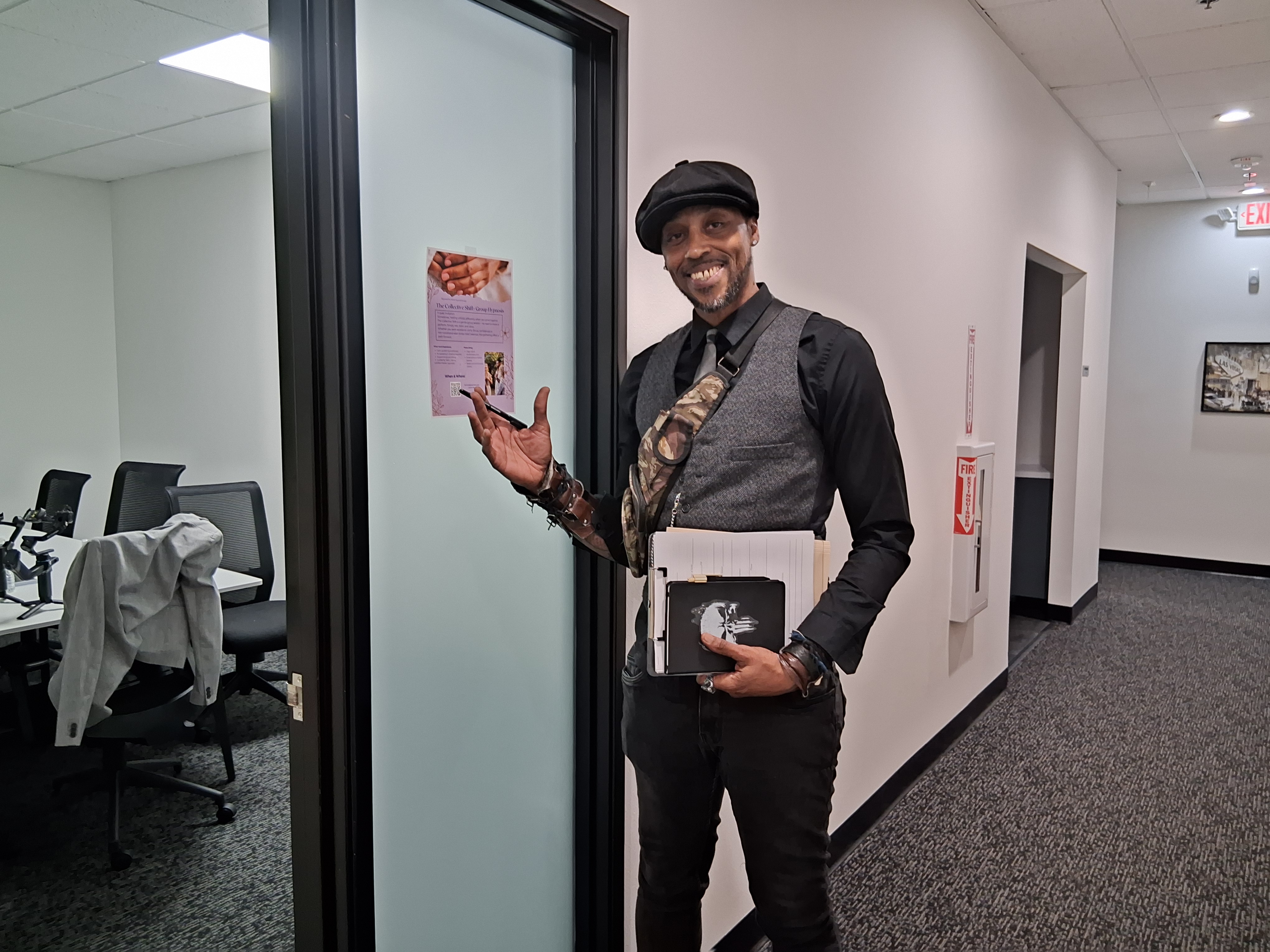
- Talib Kerns

- Jul 1
- 7 min read

I drowned when I was seven years old. Seven minutes without breath. No light, no angels—just a place of pure awareness, guided by a presence that told me, “It’s not your time.” That moment fractured everything I thought I knew about reality. Years later, a car accident left me partially paralyzed. Doctors said I’d never walk normally again. I visualized movement, rebuilt my body through sheer will, and within a year mastered a Chen Tai Chi system that typically takes decades.
These experiences taught me something profound: the mind is not confined to the brain. The mind shapes the brain. And hypnosis—real hypnosis, the kind I practice at Beyond the Mind Hypnotherapy—is one of the most direct paths to accessing that shaping power.
But let’s get one thing straight: hypnosis isn’t about control. It isn’t about someone else taking over your mind. It’s about freedom—freedom from the stories you’ve been telling yourself, freedom from the identity you’ve mistaken for yourself, freedom to become something new.
The question is: how does it work?
The Two Hemispheres: A House Divided- Hemisphere Synchronization
For decades, pop psychology has told us a simple story: the left brain is logical, analytical, and verbal; the right brain is creative, intuitive, and emotional. The truth is more complex—and far more interesting.
Research on hypnosis has historically suggested that the right cerebral hemisphere might be the primary focus of brain activity during hypnosis. But more recent evidence tells a different story. Some hypnotic phenomena—particularly concentrated attentional focus and the role of language in establishing hypnotic reality—may actually involve the left hemisphere more heavily.
This isn’t a battle between hemispheres. It’s a dance.
A 2024 study published in the journal Cortex used high-density EEG to examine brain activity during hypnotic states. The researchers found that interhemispheric frontoparietal connectivity—the communication between the left and right hemispheres—was what distinguished hypnosis from ordinary waking consciousness. In other words, hypnosis isn’t about one hemisphere dominating the other. It’s about the two hemispheres talking to each other more effectively.
The study also found that theta brainwave power was enhanced during hypnosis. Theta waves (4-8 Hz) are associated with deep relaxation, creativity, and the kind of intuitive knowing that bypasses the critical, analytical mind. When you’re in theta, you’re in the space between waking and sleeping—the space where change becomes possible.
This is what I call Beyond the Mind: not the absence of thought, but the integration of everything thought can’t touch.
Hemi-Sync: The Technology of Coherence
If hypnosis is the art of accessing this integrated state, Hemi-Sync is the science.
Developed by Robert Monroe, Hemi-Sync (short for “hemispheric synchronization”) uses a phenomenon called the Frequency Following Response. If you hear a sound frequency that approximates a brainwave state—say, the theta range—your brain will naturally try to match that frequency.
Here’s the elegant part: because these frequencies are outside the range of human hearing, Hemi-Sync generates them through binaural beats—slightly different frequencies played in each ear. If your left ear hears 200 Hz and your right ear hears 210 Hz, your brain doesn’t hear either frequency. It “hears” the difference: 10 Hz, right in the theta range.
The result? Your brain synchronizes its hemispheres. The left and right hemispheres begin to operate in coherence, rather than in opposition.
Why does this matter for hypnotherapy? Because when your brain is coherent, you’re more receptive. The critical filter of the left hemisphere relaxes. The intuitive, pattern-recognizing capacity of the right hemisphere opens up. And in that space, therapeutic suggestions can bypass the defenses of the conscious mind and land directly where they need to go: the subconscious.
At Beyond the Mind Hypnotherapy, I don’t just use Hemi-Sync—I integrate it with Qigong breathwork, NLP, and Silva Method countdowns to rewire subconscious patterns at the deepest level. The goal isn’t relaxation for its own sake. The goal is transformation.
The Breath and the Nervous System: Regulation Before Revelation
Here’s something most people don’t understand: you can’t change your mind if your nervous system is stuck in survival mode.
The autonomic nervous system has two branches: the sympathetic (fight-or-flight) and the parasympathetic (rest-and-digest). When you’re chronically stressed, anxious, or traumatized, your sympathetic nervous system is overactive. Your body is prepared for threat—even when there is no threat. In this state, the higher cognitive functions of the prefrontal cortex are literally dampened. You can’t think clearly. You can’t access new perspectives. You can’t change.
Hypnosis changes this.
Studies have consistently demonstrated that hypnosis significantly impacts autonomic nervous system function, lowering sympathetic activity and enhancing parasympathetic tone. A 2024 review in Brain Sciences confirmed that hypnosis produces a measurable relaxation response, shifting the body from a state of stress to a state of safety.
But here’s the key: this shift is intimately connected to breathing.
Research using functional MRI has shown that hypnosis can reduce respiratory amplitude by over 9% while increasing respiratory stability. The neural mechanisms involve the prefrontal cortex, insula, and cerebellum—regions associated with executive control, interoception, and motor coordination. In other words, hypnosis doesn’t just tell your body to relax. It reorganizes the neural circuits that control your breathing.
This is why breathwork is central to my practice at Beyond the Mind. When you regulate your breath, you regulate your nervous system. When you regulate your nervous system, you create the conditions for deep hypnotic work.
The rhythm matters. Cardiac coherence—breathing at a rate of about six breaths per minute—has been shown to increase heart rate variability, a key indicator of resilience to stress. This rhythm balances the sympathetic and parasympathetic systems, creating a state of physiological coherence that makes the mind more suggestible and the subconscious more accessible.
From Dysregulation to Regulation: The Hypnotherapeutic Path
Most people walk through my door in a state of dysregulation. Their breathing is shallow. Their nervous system is locked in fight-or-flight. Their left and right hemispheres are out of sync. They’re stuck in stories about who they are and what they can’t do.
The path out of that state is not more thinking. It’s re-patterning.
Hypnotherapy provides a structured way to move from dysregulation to regulation:
Breath regulation slows the sympathetic nervous system and activates the parasympathetic.
Hemi-Sync or similar auditory guidance synchronizes the hemispheres, creating neural coherence.
Therapeutic suggestion lands in the subconscious, where it can rewrite the old programs.
Integration—the new patterns become embodied, not just intellectualized.
This isn’t magic. It’s neuroscience applied with intention.
Beyond the Mind: The Integration
I’ve spent my life exploring the boundaries of consciousness—through near-death experiences, paralysis and recovery, martial arts, and the study of ancient traditions. What I’ve learned is this: the mind is far more powerful than we’ve been taught to believe. But that power is often fragmented—split between hemispheres, trapped in old patterns, hijacked by a dysregulated nervous system.
Hypnotherapy, at its best, is the integration of these fragments. It brings the left and right brain into coherence. It brings the sympathetic and parasympathetic nervous systems into balance. It brings the conscious and subconscious minds into alignment.
This is what I mean by Beyond the Mind—not escaping the mind, but moving through it, integrating its parts, and arriving at a state of wholeness that transcends the old limitations.
As I was told during that vision of the electric plasmic ocean: “The key to all suffering is in your identity. Let your identity go.”
Hypnosis is the vehicle. Coherence is the mechanism. Freedom is the destination.
Your Invitation
If you’re reading this, you’re probably sensing something: a restlessness, a knowing that there’s more to you than the story you’ve been living. Maybe you’ve tried talk therapy. Maybe you’ve tried meditation. Maybe you’ve tried everything—and you’re still stuck.
I’ve been there. I know what it’s like to feel trapped in a body that won’t cooperate, in a mind that won’t quiet down, in a life that feels like it’s happening to you rather than for you.
The good news: you’re not broken. You’re just dysregulated. And dysregulation can be regulated.
At Beyond the Mind Hypnotherapy, we don’t just treat symptoms. We address the whole system—brain, breath, nervous system, and the deeper consciousness that underlies all of it. We use the best of modern neuroscience (Hemi-Sync, HRV tracking, evidence-based protocols) alongside ancient wisdom (Qigong breathwork, martial arts principles, meditative practices).
The result is a transformation that goes beyond the mind.
Are you ready to let go of who you think you are—and discover who you’ve always been?
Talib Kerns is the founder of Beyond the Mind Hypnotherapy. Drawing on decades of personal exploration—from near-death experiences to martial arts mastery to advanced hypnotherapeutic training—Talib helps clients break free from limiting identities and access the full power of their integrated mind.
[Visit Beyond the Mind Hypnotherapy to begin your journey.]
Check out my podcast about it below with special guest Coach Sudan (FB: Bronz Tiga) with Ancient Athletic Games.
References
An interhemispheric frontoparietal network supports hypnotic states (2024). Cortex, 177, 180-193. https://www.sciencedirect.com/science/article/pii/S0010945224001461
Supports: The finding that interhemispheric frontoparietal connectivity distinguishes hypnosis from control conditions, and that theta power is enhanced during hypnosis.
Gamma power and beta envelope correlation are potential neural predictors of deep hypnosis (2024). Scientific Reports, 14, 6329. https://pmc.ncbi.nlm.nih.gov/articles/PMC10943225/
Supports: The role of interhemispheric Dorsal Attention Networks (DAN) and specific EEG markers (gamma and beta activity) in predicting hypnotic depth.
Investigating functional brain connectivity patterns associated with two hypnotic states (2023). Frontiers in Human Neuroscience, 17, 1286336. https://pmc.ncbi.nlm.nih.gov/articles/PMC10773817/
Supports: The finding that respiration rate significantly slows during hypnosis, as measured by fMRI.
Hypno-cardiac physiology: Aiming for an organised study of the physiological effects of hypnosis on the cardiovascular system (2025). Journal of Integrative Medicine, 23(5), 457-461. https://www.sciencedirect.com/science/article/abs/pii/S2095496425001062
Supports: The finding that hypnosis increases parasympathetic activation and reduces sympathetic activity (autonomic nervous system modulation).
Impact of hypnosis on psychophysiological measures: A scoping literature review (2022). American Journal of Clinical Hypnosis, 64(1), 36-52. https://pubmed.ncbi.nlm.nih.gov/34748461/
Supports: The conclusion that results "converge to show reductions in sympathetic responses and/or increases in parasympathetic tone under hypnosis."
Autonomic changes during hypnosis: a heart rate variability power spectrum analysis as a marker of sympatho-vagal balance (n.d.). PubMed. https://pubmed.ncbi.nlm.nih.gov/
Supports: The finding that hypnosis "affects heart rate variability, shifting the balance of the sympatho-vagal interaction toward an enhanced parasympathetic activity, concomitant with a reduction of the sympathetic tone."
Hemi-Sync (n.d.). Wikipedia. https://en.wikipedia.org/wiki/Hemi-Sync
Supports: The definition of Hemi-Sync as "Hemispheric Synchronization" and the frequency-following response designed to synchronize the two hemispheres of the brain.
Binaural Stimulation Method and the Altered State of Consciousness (2018). The 35th Symposium on Life Information Science. https://www.jstage.jst.go.jp/
Supports: The explanation that Hemi-Sync "leads users easily into a deep relaxed state and into a different state of consciousness by applying auditory stimulations of slightly different frequencies to the left and right ears."


Comments